
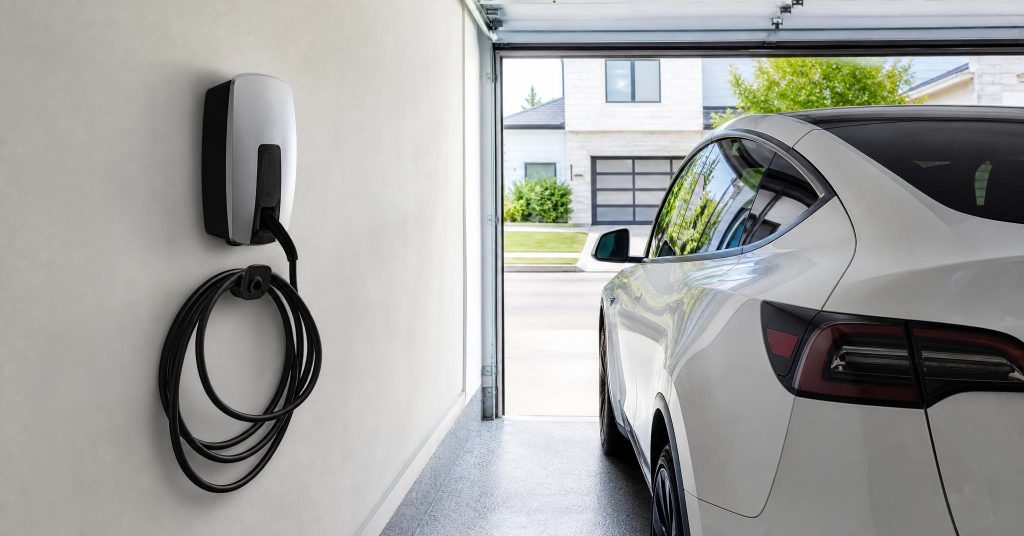
Leave every morning with a full battery.
Public charging works until it doesn’t. A Level 2 charger at home means you plug in at night and stop thinking about it.
Why quotes for this vary so much
The charger is the cheap part and it barely moves the price. Two things about your house do.
The first is the run. Panel in the garage, car parked beside it, and the job is short. Panel at the front of the house with the car at the back, and there is conduit, wall penetrations and sometimes a trench between them.
The second is whether your panel has room. A Level 2 charger is a substantial continuous load. On a 200-amp service with free slots it usually drops straight in. On an older or full panel, the panel comes first.
That second one is where surprise add-ons come from, and it is entirely avoidable. We check the panel before quoting, not during the install.
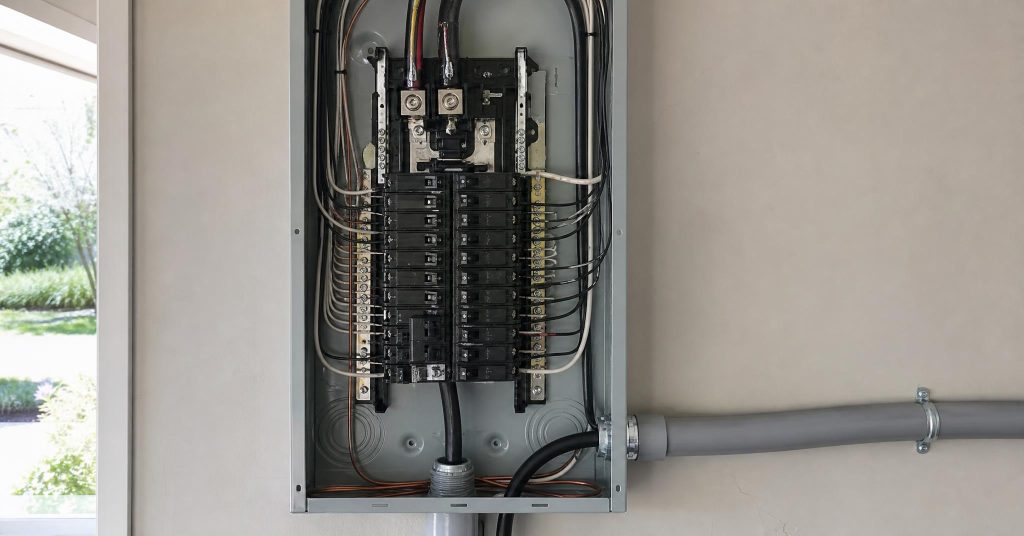
Typical range for a Level 2 install here, permit and inspection included. If the panel needs upgrading first that is a separate $2,800 to $4,200, and we tell you that before you commit rather than halfway through.
Get your install quote
Tell us where the car parks and roughly where your panel is. We check the panel capacity before quoting, so the price you get is the price.
Most installs land between $850 and $1,800 before rebates.
Request your written quote
Level 2 install, permit and inspection included.
Rather send the details?
What you actually pay after rebates
Two incentives stack, and most people only know about one.
The federal 30C credit covers 30 percent of the installed cost, up to $1,000. SDG&E offers a rebate on top, from $200 for standard households up to $1,000 for income-qualifying ones.
On a typical $1,400 install, that combination brings the real out-of-pocket to somewhere near $780. For an income-qualifying household it can land close to nothing.
We handle the rebate paperwork as part of the job.
What the price includes
Dedicated circuit and breaker
Sized to your charger’s continuous draw, wired to code, on its own breaker.
Hardwired or plug-in
Hardwired for permanent 48-amp units, or a NEMA 14-50 outlet if you would rather keep the charger portable.
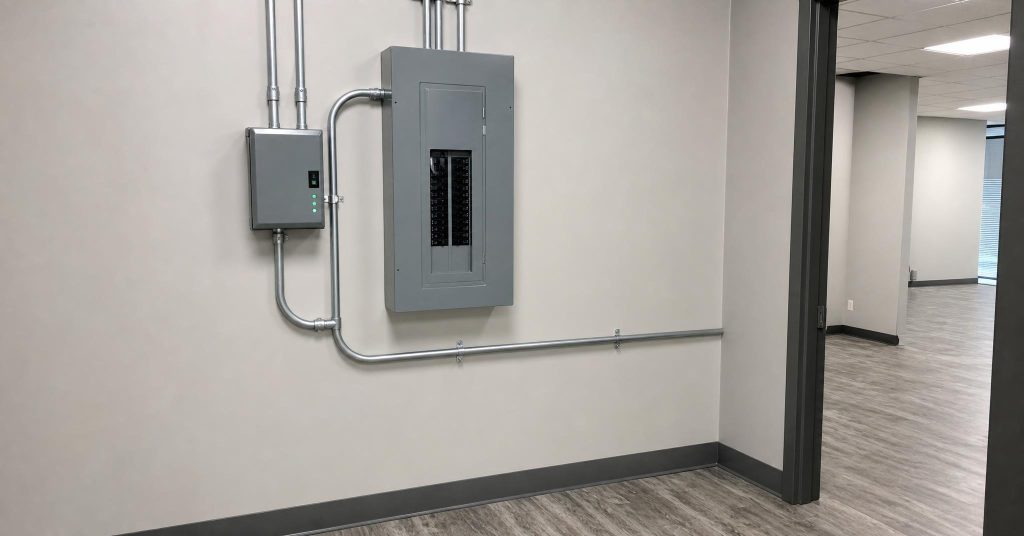
Panel load check first
Done before quoting. If the service cannot carry it, you hear that up front with a price attached.
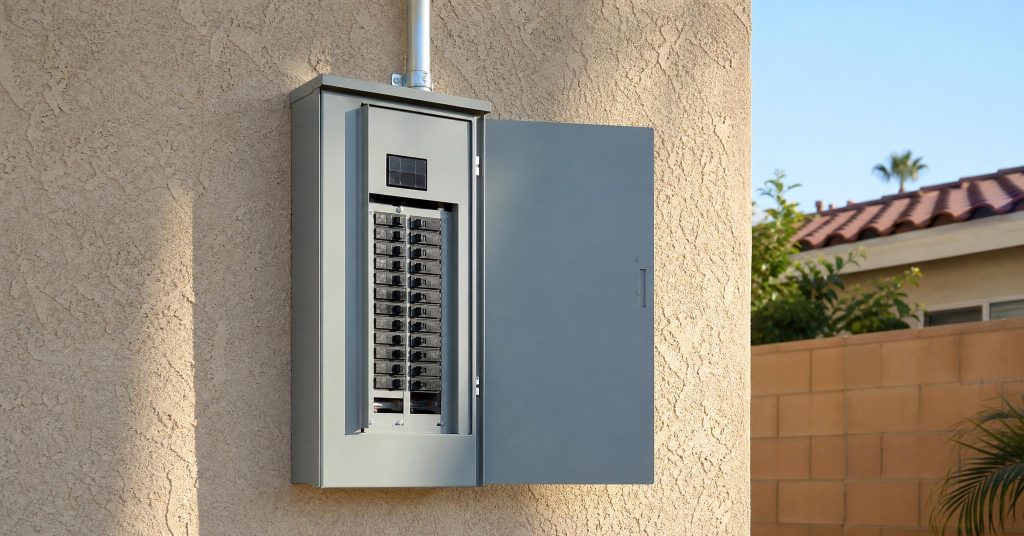
Permit and inspection
Every EV install in San Diego County needs a permit and a final inspection. We pull it, schedule it and attend it.
Taking delivery soon? Sort the charger first.
Written quote, panel checked, no surprise add-ons.
Common questions
Can I just use the dryer outlet?
For occasional charging, sometimes. A charger draws its full current continuously for hours, which is a different duty than a dryer cycle, and sharing the circuit is not code-compliant for a permanent install.
Hardwired or plug-in?
Hardwired is better for permanent 48-amp installs like a Tesla Wall Connector at full power. A NEMA 14-50 outlet suits portable chargers up to 40 amps continuous and lets you take the unit with you if you move.
Do you install all brands?
Yes. Tesla Wall Connector and universal J1772 chargers on all major brands.
Will my panel handle it?
A 200-amp service with free slots usually handles a charger alongside existing loads. A 100-amp panel may need load management or an upgrade. We check before quoting.
Do I need a permit?
Yes. Every Level 2 install in San Diego County requires a building permit and a final inspection. It is included in the price.
One written quote, panel included.
We check what your service can carry before we price the job, so nothing appears later.