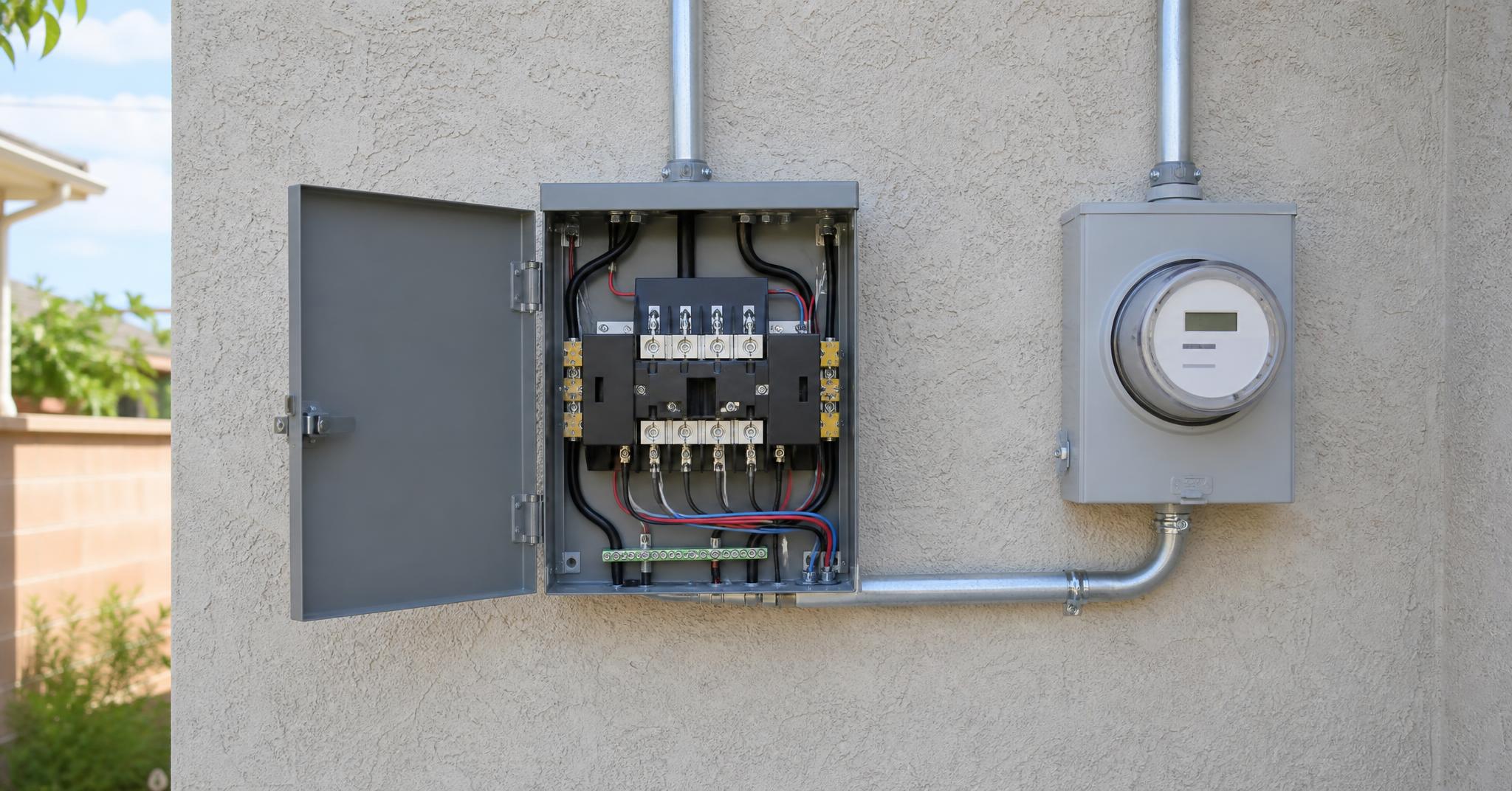
A generator on its own does nothing for a property. The transfer switch is what moves the electrical system from utility power onto generator power, and back again when the utility returns. It is the piece most people never think about and the piece that decides whether the system works.
An automatic transfer switch does that changeover without anybody present. It senses the outage, signals the generator to start, waits for it to stabilise, and moves the load across. When utility power comes back, it transfers back and shuts the generator down.
A transfer switch has one non-negotiable job beyond convenience: it has to guarantee that generator power and utility power are never connected at the same time. That separation protects the equipment, the property, and utility crews working on the line.
This is the reason transfer equipment is a licensed electrical job and the reason improvised arrangements are genuinely dangerous rather than merely against the rules. If you have been offered a cheap workaround involving a cord and an outlet, that is the thing this equipment exists to prevent.
An automatic switch handles everything unattended. That matters if the property is sometimes empty, if anybody there would struggle with a manual changeover, or if what you are protecting cannot tolerate the gap, such as refrigeration, a well pump, or medical equipment.
A manual switch costs less and requires somebody present to operate it. For a property that is always occupied and where a short delay is acceptable, it can be a reasonable choice. We will lay out both rather than assuming the more expensive answer.
The other decision is scope. A service-entrance arrangement transfers the whole property. A subpanel arrangement moves a chosen set of circuits, which lets a smaller generator cover what actually matters.
Partial coverage is often the more sensible answer, particularly where the alternative is a much larger unit. It does mean deciding in advance which circuits are worth backing up, and that conversation is worth having carefully because it is awkward to change later.
Installation means working at or near the service entrance, so it is a permitted job with utility coordination and a scheduled power interruption for part of a day. We handle the permitting and scheduling rather than leaving it with you.
Physically, the switch is mounted, tied into the panel and the generator, and the control wiring is run. Then it is commissioned: tested under real transfer conditions so you have watched it work before you need it to. That last step is the one that separates a finished installation from a working one.
Transfer switches wear. They contain contacts that move under load, and on an older system they are a legitimate suspect when a generator starts but the property stays dark.
If your generator runs fine but will not transfer, the switch is where we look first. Replacement is usually a smaller job than the original installation because the wiring paths already exist.
Most transfer switches are mounted outdoors near the service entrance, close to the meter and main panel. That keeps the wiring runs short and the installation clean, and it is usually the lowest-cost arrangement.
Where the panel is indoors, or where the generator sits some distance from the service entrance, the layout gets more considered. Longer runs cost more and there are limits on how far control wiring can sensibly go. This is one of the reasons we walk the property before quoting rather than working from a description.
Clearance matters too. The switch needs accessible working space in front of it, which sounds obvious until it is installed behind where somebody planned to put storage.
Transfer switches contain contacts that physically move under load, and those wear. The signals worth noticing are a generator that starts but never picks up the load, a transfer that happens but takes noticeably longer than it used to, a changeover that is audibly rougher than it once was, or any visible heat discolouration around the enclosure.
Intermittent behaviour is the most common and the most easily dismissed. If the system has worked inconsistently across the last few outages, that is worth investigating before the next one rather than after.
Not safely for a standby installation. The transfer switch is what keeps generator power and utility power separated, and that separation is what protects your equipment and utility crews.
It has to be correctly rated for the load it carries and compatible with how the generator is controlled. That is part of what gets confirmed during sizing and load planning rather than assumed.
Typically part of a day, because the work happens at the service entrance. We give you the window in advance and coordinate it with the utility.
That is the most likely place to look. See generator repair for how we diagnose it.
Usually yes, depending on the unit and how it is controlled. We would confirm compatibility before quoting.
Sometimes. Transfer equipment ties directly into the panel, so panel condition and capacity are part of the assessment. If panel work is needed we scope it together rather than discovering it partway through.
If you are planning a generator, the transfer decision belongs in that first conversation rather than at the end. It shapes the sizing, the cost, and which circuits stay on.
Transfer switch work sits within our generator services.

Get Started
Share a few details about your generator or electrical project and we will help you understand the next best step, whether you are planning a standby installation, scheduling maintenance, or upgrading the electrical system that supports it.