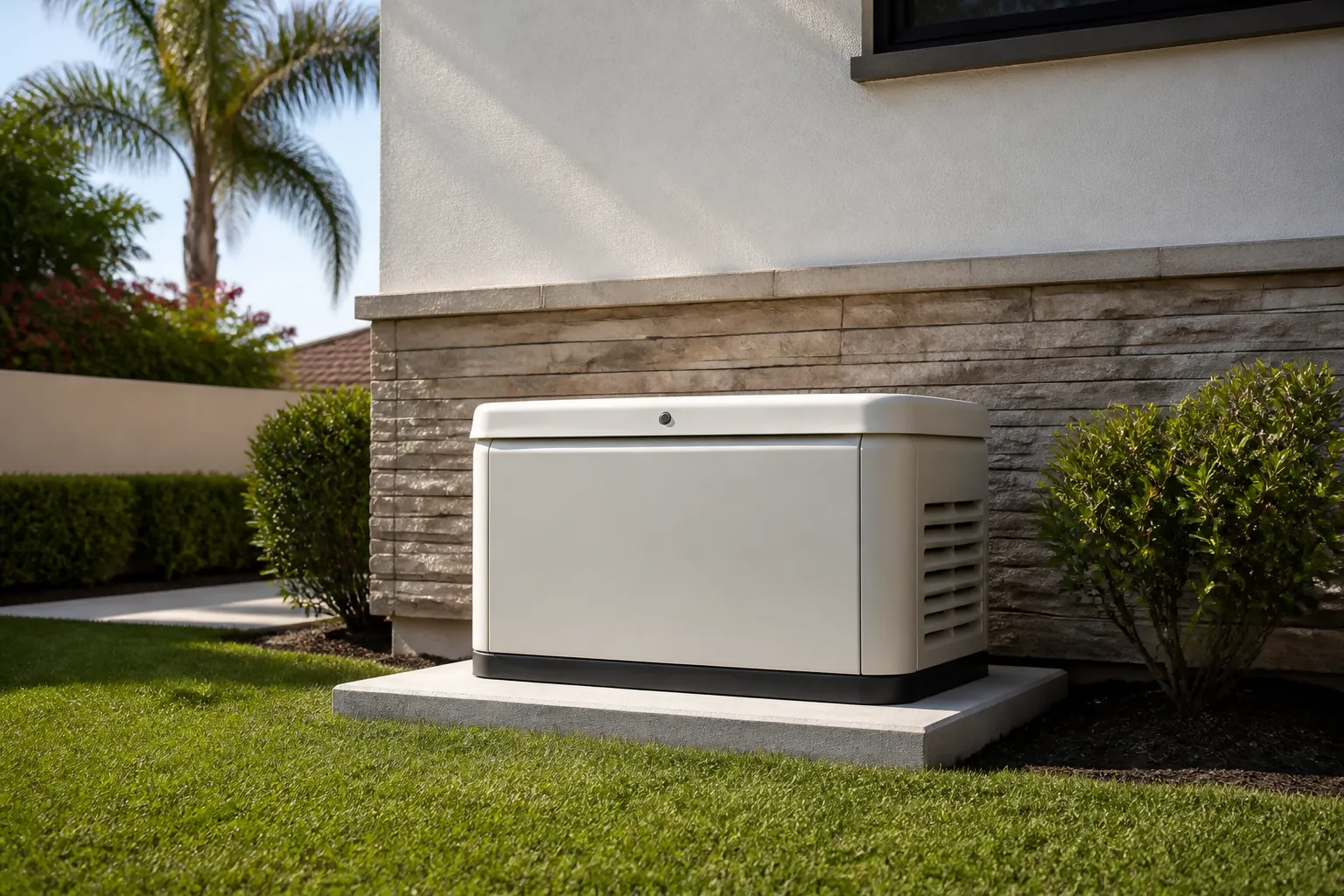
If the lights go out and your home goes quiet, the problem is bigger than inconvenience. A generator installation can keep essential circuits ready so your refrigerator, lights, networking, and other critical loads stay available when utility power drops.
Peak Power Systems handles generator installation for Lakeside homeowners who want a clear plan, a clean install, and wiring that matches the home’s electrical system. We start with an on-site assessment, explain the options, and map out what the generator will support before any work begins.
A standby generator is worth considering when brief outages, utility work, or repeated power interruptions create real disruption at home. The goal is not to power everything all at once. It is to keep the right circuits available so you can stay comfortable and protect important appliances.
For many Lakeside homes, that means planning for refrigeration, selected lighting, internet equipment, garage access, medical devices, or heating and cooling loads that matter most. A well-planned install starts with those priorities, not with a guess at what will fit later.
Generator installation is not one-size-fits-all. The right setup depends on the home, the load you want covered, and the way the existing electrical panel is arranged. We help you compare practical options so the system matches the way you actually use power.
Standby units are designed to sit ready and activate when utility power drops. They are commonly chosen for homeowners who want a built-in backup setup tied to key circuits or a larger share of the home’s electrical load.
Interlock kits are a separate approach that connects a portable generator to selected circuits through the panel. They are useful when the goal is controlled backup for specific loads rather than whole-home coverage.
Before installation, we look at what matters most: major appliances, lights, outlets, and any circuits that need to stay available. That planning step keeps the install focused and prevents surprises once the work starts.
Peak Power Systems keeps generator installation straightforward. We do not start by selling parts. We start by understanding the home, the panel, and the circuits that matter most, then we build the plan from there.
We review the existing electrical setup, the loads you want covered, and the best path for the generator connection.
You get a clear outline of what will be installed, how it will be tied into the system, and what work is included.
We handle the wiring, panel coordination, and connection points needed for the generator to integrate with the home.
Once the installation is complete, we review the setup with you so you know how the system is intended to operate.
That process keeps the project organized and helps homeowners understand where the backup power will go and how the system is arranged.
Generator installation often involves more than the generator itself. The electrical path has to be built carefully so the backup source can support the intended circuits without guesswork.
We connect the generator setup to the home’s panel or transfer arrangement so selected loads can be served from backup power when needed.
Depending on the plan, we can add the wiring needed for the circuits you want protected and the control components required for clean operation.
If the job calls for supporting work such as circuit changes, dedicated runs, or coordination with existing panel issues, we handle that as part of the overall installation plan.
Common generator-related work can include:
A generator is only useful if the system is planned around the loads that matter. Oversizing the scope can lead to unnecessary expense and complexity. Undersizing it can leave you disappointed when the power goes out and the wrong circuits are still dark.
That is why we look at the home first. The job may involve determining whether the panel can support the intended setup, how the changeover will work, and which circuits should be grouped together. Good planning gives the homeowner a system that feels intentional rather than improvised.
Some homes need panel upgrades, breaker changes, or circuit adjustments before generator wiring can be added cleanly. We identify those needs early so the install is built on a sound electrical base.
If you expect more electrical demand later, it makes sense to discuss that during planning. It is easier to prepare the system now than to rebuild portions of it later.
Peak Power Systems serves Lakeside homeowners from our local base and works throughout the surrounding East County area. That includes nearby communities such as El Cajon, Santee, La Mesa, San Diego, Spring Valley, Lemon Grove, Poway, Ramona, Alpine, and Jamul.
For larger generator projects, we can also travel farther across San Diego County. If your home sits outside the immediate Lakeside area, the first step is still the same: we review the electrical setup, discuss the backup goals, and build the install around the property.
You do not need to have every answer before booking a generator installation visit. A little preparation helps, though, and it makes the first appointment more productive.
That information helps us narrow the options and recommend a layout that fits the home instead of forcing the home to fit the equipment.
Installation is the centre of our generator services, but it is rarely the only decision. These are the pieces that usually sit around it.
Standby generators and East County power outages
Start with the loads you want to keep available. From there, we can look at the panel, the wiring path, and whether a standby setup or interlock-style arrangement makes more sense for your home.
Yes. Many homeowners choose to back up only the circuits that matter most, such as refrigeration, lighting, networking, or selected outlets. We help map that out during planning.
If the existing panel or breakers need attention before generator wiring can be added, we address that as part of the project plan so the install is built on solid electrical conditions.
Yes. We outline the scope, the wiring approach, and the expected sequence before installation begins so you know what will happen and why.
Yes. Generator installation can be coordinated with rewiring, circuit changes, or other electrical work when the project calls for it.
If backup power has become a priority, it is smart to book early so we can assess the home, review the load needs, and plan the installation without rushing the details.
If you want generator installation for a Lakeside home, Peak Power Systems can help you plan the system, prepare the wiring, and complete the installation with a clear handoff. Call 619-333-5897 or email info@peakpowersystems.com to schedule a visit.
Installation pricing depends on four things specific to your property: what you want running during an outage, the condition and capacity of your existing panel, your gas supply and the distance to it, and where the unit can legally sit. We have explained each of them, with current ranges, on our generator cost page. It also has a calculator that gives you a price range and a recommended model in a few minutes.

Get Started
Share a few details about your generator or electrical project and we will help you understand the next best step, whether you are planning a standby installation, scheduling maintenance, or upgrading the electrical system that supports it.