Power interruptions in East County come from a few directions. Storm damage and equipment faults account for some. Public Safety Power Shutoffs, where utilities de-energize lines during high fire risk conditions, account for others, and those can last considerably longer than a typical outage.
That combination is why standby generators come up more often in the backcountry and foothill communities than in denser coastal areas.
Standby versus portable
A portable generator is a separate machine you roll out, fuel, start, and connect. It is less expensive and it requires you to be home and able to handle it.
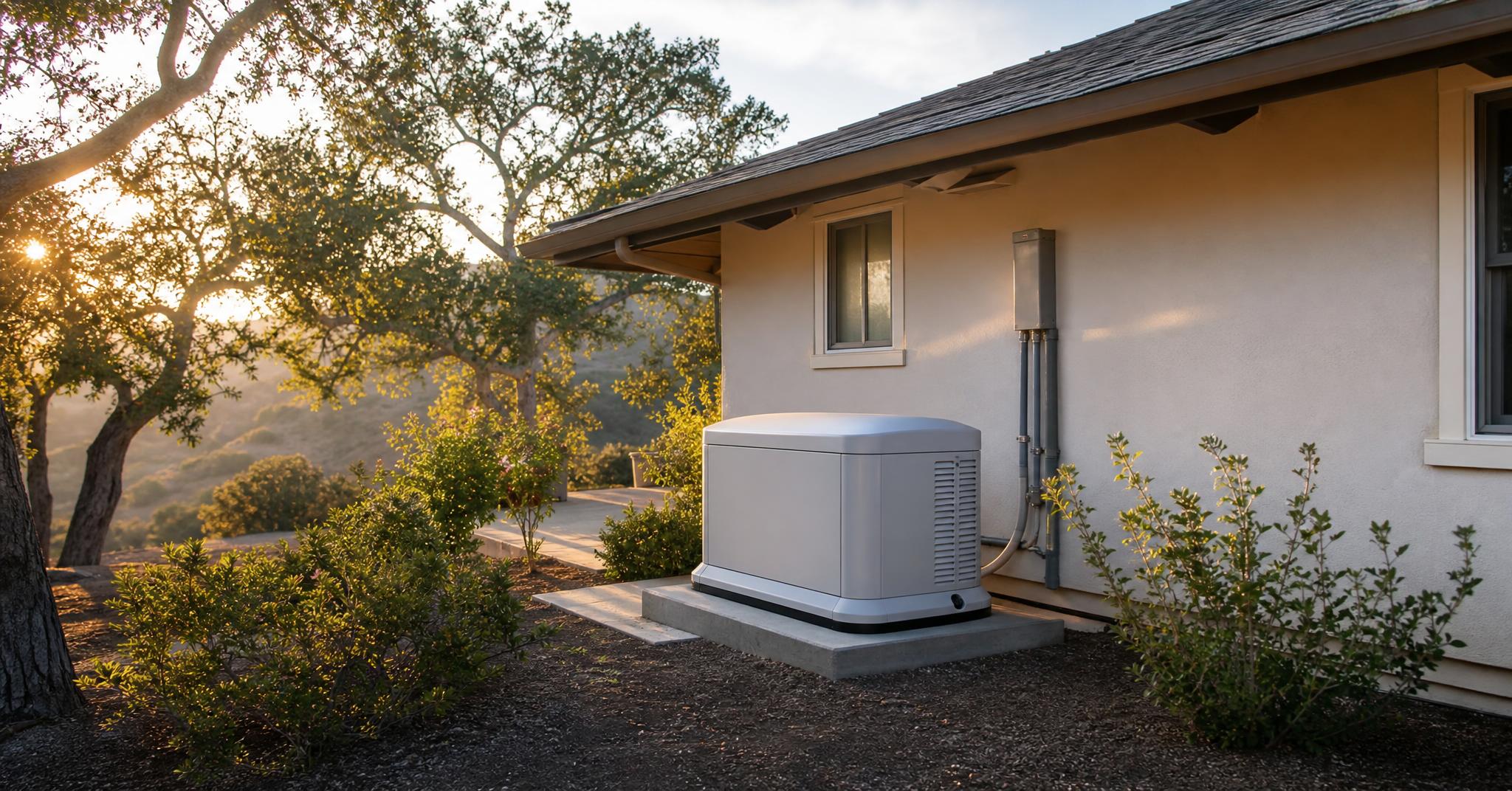
A standby generator is permanently installed, connected to natural gas or propane, and wired through a transfer switch. It starts automatically when it detects loss of utility power and shuts down when power returns. Nobody has to be home.
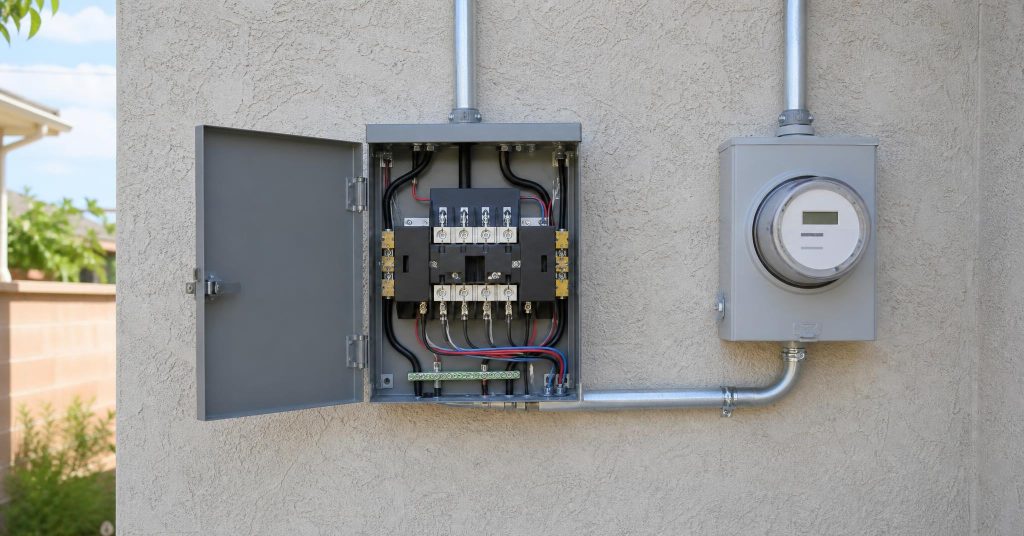
The transfer switch is not optional
Any permanently connected generator requires a transfer switch that isolates the home from the utility while the generator runs. This prevents backfeed onto utility lines, which is a genuine hazard to line crews. Connecting a generator to house wiring without proper transfer equipment is both dangerous and a code violation.
Whole-home or essential circuits
Two approaches, and the right one depends on what you actually need running.
- Essential circuits. A smaller unit powering a selected subpanel: refrigeration, well pump, some lighting, a furnace, medical equipment, network gear. Lower cost, smaller footprint.
- Whole-home. A larger unit covering the full service, often with load management to shed lower-priority circuits when demand peaks. More capability, higher cost.
For properties on a well, the well pump is frequently the deciding factor. Its starting current can dominate the sizing calculation.
What sizing actually involves
Sizing is not a square-footage rule of thumb. It comes from the specific loads you intend to run, their starting characteristics, and whether load management is part of the design. Fuel supply matters too, since natural gas availability varies across East County and propane means planning tank capacity.
Maintenance is part of ownership
A standby generator is an engine that sits unused for long stretches and is expected to start on demand. Units run periodic self-tests, but oil, filters, batteries, and connections still need attention on a schedule. A generator that has not been serviced is a generator you are hoping about rather than relying on.
Peak Power Systems handles generator installation and generator maintenance throughout its San Diego County service area.