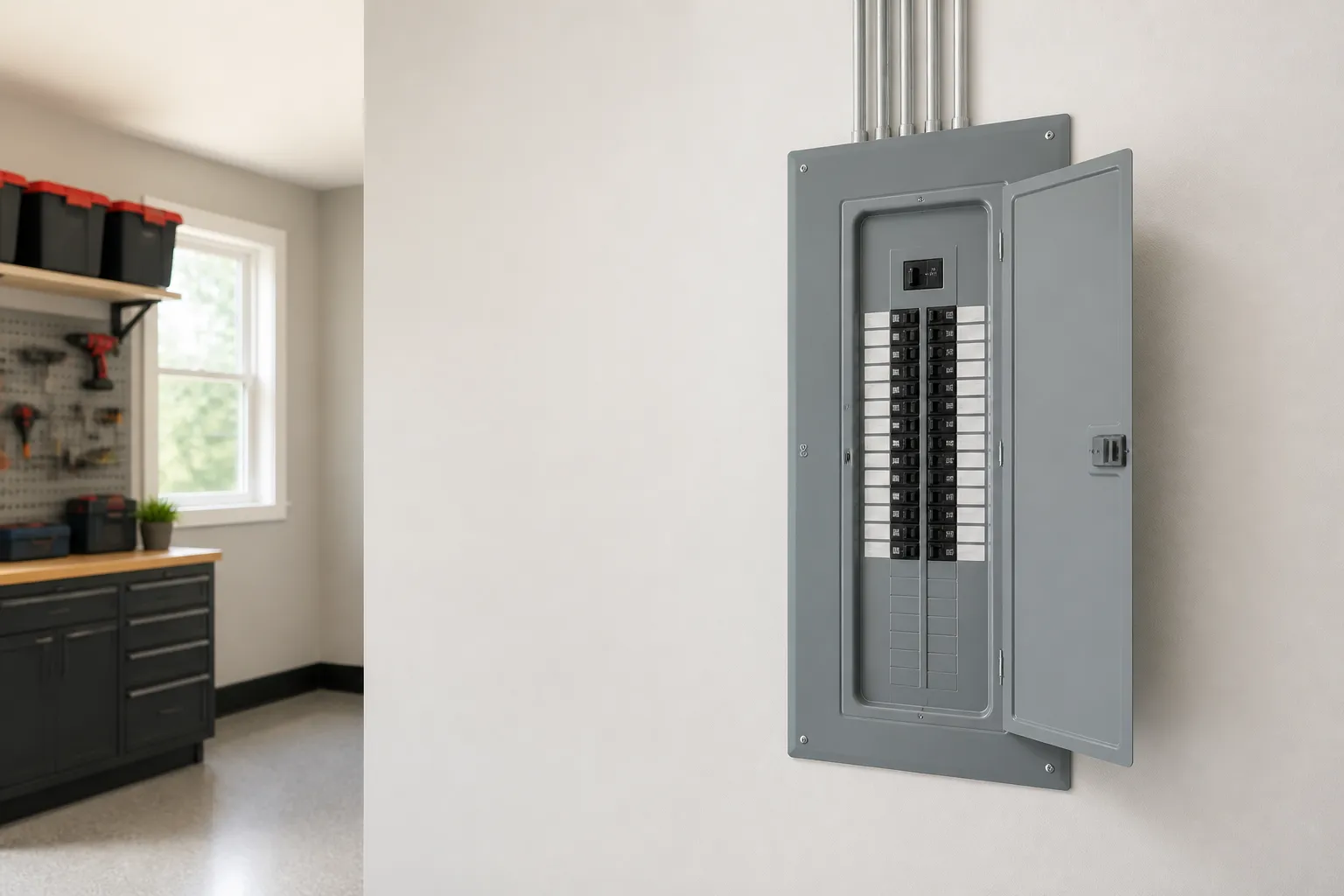
Breakers that trip when you run the microwave and the dryer at once are a sign your panel may be out of room. If lights dim, circuits feel crowded, or you keep resetting the same breaker, the electrical system is trying to tell you something.
Peak Power Systems evaluates panel issues at the source, then maps out the right upgrade for your Lakeside home before any work starts. That means a real diagnosis, a written scope, and a clear path to more usable power without guessing at the fix.
An electrical panel has one job: distribute power safely across the house. As homes add more appliances, EV charging, office gear, spa equipment, or lighting loads, older panels can run out of space and headroom. The result is not always dramatic. Many homeowners first notice smaller signs that keep getting worse.
Peak Power Systems often hears from Lakeside homeowners after months of nuisance trips, repeated breaker resets, or a panel that has become awkwardly crowded with tandem breakers and add-ons. We look at the full load picture, not just the branch circuit that happens to trip today.
A panel upgrade is not just a hardware swap. It is a chance to bring the service capacity, circuit layout, and protection strategy up to the way you actually use the house. For many homes, the improvement is immediate: fewer interruptions, cleaner circuit organization, and room for future additions.
We commonly upgrade panels for homeowners who want to support new loads without overworking the existing setup. That can include a larger service, a replacement panelboard, or a layout that better separates heavy-use areas from sensitive electronics.
A panel upgrade starts with a walk-through at your property. We want to see what is there now, how the circuits are being used, and whether the issue is truly the panel or something feeding into it. That first visit matters because panel symptoms often overlap with wiring issues, breaker wear, or overloaded branch circuits.
Peak Power Systems provides a written quote after the job is evaluated. You see the scope, timeline, and price before work begins, and any permit steps are handled when the local jurisdiction requires them.
Not every house needs the same solution. Some homes need a replacement panelboard with better organization. Others need a service upgrade that increases available capacity. The right answer depends on what the home uses now and what you want to add later.
For Lakeside properties, we often see requests tied to panel repairs, partial rewiring, dedicated circuits, EV charger installation, or standby generator work. When those projects stack up, the panel becomes the hub that decides what can move forward smoothly and what cannot.
We plan the job so the sequence makes sense and the finished panel is easy to use. The panel is not treated like a standalone box. It is tied to the whole house, so the circuits, load demands, and downstream devices all matter.
Peak Power Systems keeps the process straightforward: diagnose the root cause, explain the options, complete the work to the agreed scope, then review the finished panel with you so you know what changed and why.
Some calls start with a tripping breaker. Others begin during a remodel, after an EV charger decision, or when a homeowner realizes the panel has no clean path for future work. A panel upgrade can solve several headaches at once, especially if the home has a mix of older circuits and newer electrical additions.
In Lakeside, we also see homeowners ask about panel upgrades after repeated service visits for the same part of the house. At that point, a circuit-by-circuit fix may not be enough. A better panel layout can reduce repeat problems and make the system easier to manage.
Peak Power Systems serves Lakeside and nearby communities across San Diego County, including El Cajon, Santee, La Mesa, San Diego, Spring Valley, Lemon Grove, Poway, Ramona, Alpine, and Jamul. Larger panel projects can also extend farther when the scope calls for it.
Homeowners choose a local electrician for panel work because the job is tied to the home, the permit process when needed, and the way the rest of the electrical system is arranged. A proper panel upgrade should fit the property, not force the property to fit the panel.
If breakers trip during regular use, new circuits cannot be added without workarounds, or the panel is packed with little room left, it may be too small for the home’s current demand.
Yes, a panel upgrade is often part of preparing a home for EV charger installation, especially when the existing panel has limited capacity or no spare breaker spaces.
It can. Many upgrades include cleaner circuit organization, better labeling, and a layout that makes it easier to tell which breaker controls each area.
Clear access to the panel, the area around it, and any nearby storage so the electrician can inspect, work, and verify circuits without delay.
Often, yes. If the trips are caused by overload, an outdated panel, or limited capacity, an upgrade can address the underlying issue rather than just the symptom.
Sometimes. If the existing panel cannot support new load, spare spaces, or a cleaner circuit layout, upgrading first can make later projects easier to complete.
If your Lakeside home is showing signs of panel strain, Peak Power Systems can assess the setup and explain what a panel upgrade would involve. You get a real evaluation, a written quote, and a plan that fits the electrical demands of the house.
To schedule service, contact Peak Power Systems at 9420 Woodside Ave, Suite 6, Lakeside, CA 92040, call 619-333-5897, or email info@peakpowersystems.com.
The honest test is a load calculation against what the property runs now and what you plan to add, combined with the physical condition of the equipment. Age on its own is not a diagnosis. If somebody recommends an upgrade without opening the panel, that recommendation is not based on much.
Typically part of a day, because a service upgrade involves the service entrance and therefore the utility. We give you the window in advance and coordinate the scheduling rather than leaving it with you.
Yes. Service panel work is permitted and inspected, and it involves utility coordination. That is part of the job rather than something you arrange separately.
No. Capacity is not consumption. An upgrade lets the property safely run more, it does not make the same loads cheaper to run.
Sometimes, and it is worth asking. If the main service has capacity but has run out of physical space, a subpanel can be the cheaper and less disruptive answer. If the service itself is undersized, it is not.
Usually the panel question needs answering first, because both additions depend on capacity. Handling them as one scope is almost always cheaper than discovering the constraint partway through a separate project.
Panel capacity is the gating factor for most of what people want to add to a property, which is why it anchors our electrical panel and power work. It is also the first thing we check before quoting anything that adds significant load.
Signs a panel genuinely needs upgrading, and signs it does not
Get Started
Share a few details about your generator or electrical project and we will help you understand the next best step, whether you are planning a standby installation, scheduling maintenance, or upgrading the electrical system that supports it.