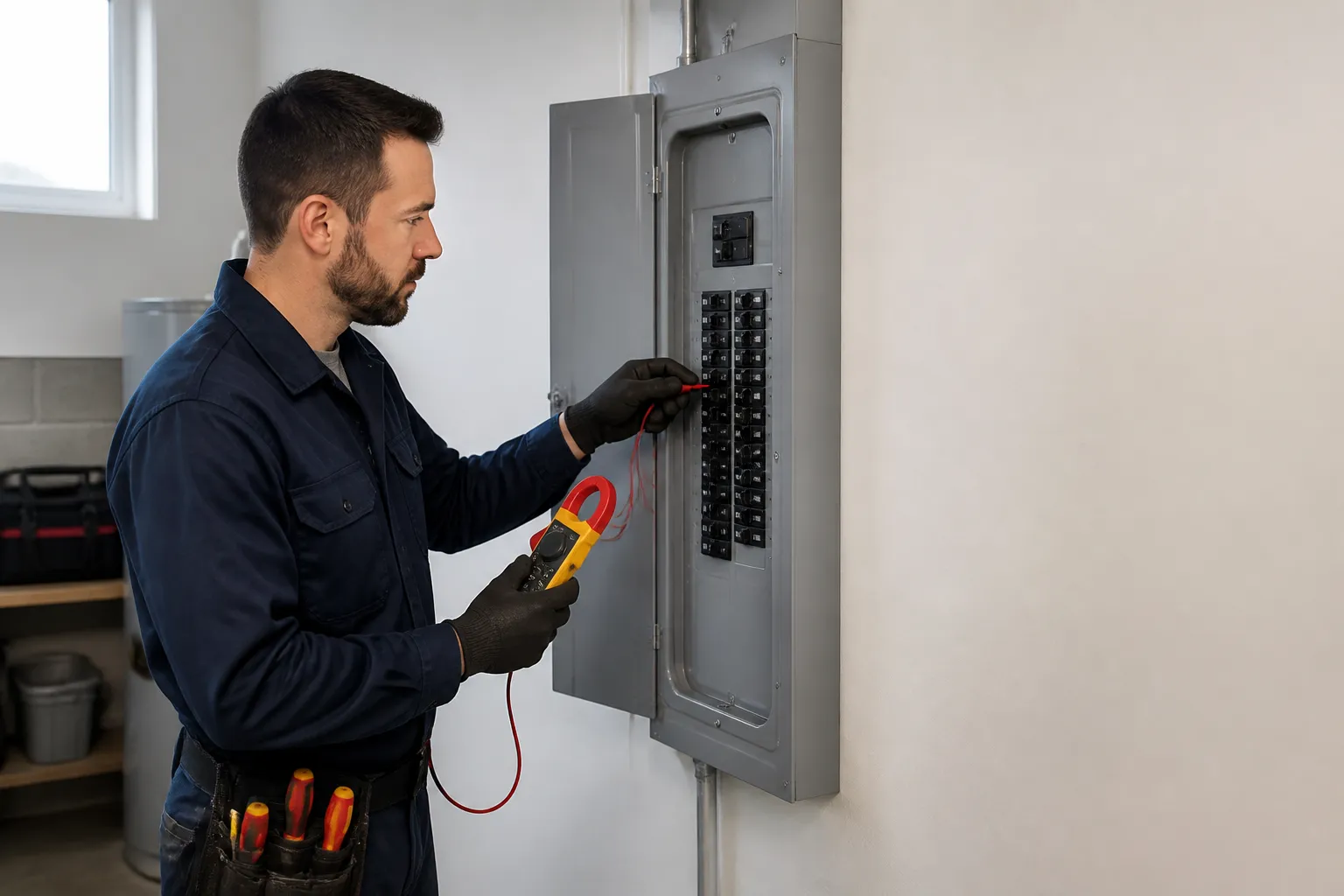
A breaker that keeps tripping, won’t reset, or leaves part of the house dark is more than a nuisance. It can point to a loose connection, an overloaded circuit, a worn breaker, or a deeper panel issue that needs a licensed electrician to sort out.
If you are seeing warm panel spots, buzzing, a burning smell, or outlets that lost power after a trip, Peak Power Systems can inspect the circuit, find the source, and recommend the right repair for your Lakeside home before you keep forcing the breaker back on.
Circuit breaker problems do not always start with a full shutdown. Often the first clue is a breaker that trips under normal use, resets only after several tries, or trips again as soon as a large appliance turns on. That pattern usually means the circuit is asking for more attention than a simple reset can give.
Other signs are easier to miss. A breaker may feel warm, the handle may sit halfway between on and off, or a group of outlets may lose power while the rest of the home looks normal. When those symptoms show up together, the panel deserves a closer look.
Not every trip means the breaker is bad. Sometimes the circuit is overloaded, sometimes a device on the line is failing, and sometimes the wiring or breaker itself has reached the point where repair or replacement is the safer move. The job is to separate a one-time nuisance from a pattern that points to risk.
At Peak Power Systems, we start by tracing the problem circuit and checking how it behaves under load. That helps us avoid guessing and keeps us from swapping parts without fixing the source.
Too many devices on one breaker can push it past its limit, especially when several high-demand items run together.
A damaged conductor, failed device, or loose connection can create a direct path that makes the breaker trip for protection.
Moisture, damaged wiring, or a faulty appliance can send power where it should not go.
Breakers wear out over time and may trip too easily or fail to reset cleanly.
Heat, corrosion, or a loose termination inside the panel can affect breaker performance and the circuit it serves.
Circuit breaker repair should start with diagnosis, not trial and error. We inspect the panel, test the affected circuit, and look for the root cause before recommending the next step. If the breaker itself is the issue, we replace it with the correct match. If the problem sits farther down the line, we repair the wiring or device causing the interruption.
For Lakeside homeowners, that means a clear process from the first visit to the final check. You know what failed, what needs to be done, and what the finished circuit should do once it is back online.
We ask which rooms, outlets, or fixtures lost power and when the breaker started acting up.
We examine the breaker, panel layout, and visible connections for signs of heat, wear, or damage.
We test the affected branch to narrow down whether the problem comes from overload, a bad device, or wiring.
We explain the issue and provide a written quote before work begins.
After the repair, we verify that the circuit holds under normal use and that the breaker is doing its job.
Some trips happen because the breaker has reached the end of its useful life. Others happen because the panel is not handling the demand placed on it. A breaker repair can be as simple as replacing one failed unit, but it can also expose a bigger issue with the panel arrangement, labeling, or load distribution.
That is why we do not treat every tripping breaker the same way. A repeated problem on a kitchen, laundry, garage, or outdoor circuit often needs a different fix than a single nuisance trip from a small appliance. If the panel itself is part of the problem, we will say so clearly.
Replacement may be the right move when a breaker will not reset, trips with normal usage after the load has been checked, shows visible damage, or no longer matches the needs of the circuit. If the panel has multiple problem breakers, that can also point to a broader issue that needs attention now rather than later.
Breaker problems affect more than convenience. A breaker that trips for the wrong reason can hide a wiring fault, while a breaker that fails to trip can leave a circuit unprotected. That is why repeated resetting is not a real fix.
Homeowners sometimes keep turning a breaker back on because the lights return for a while. But if the circuit trips again, the panel is telling you something still needs to be corrected. Waiting often makes the repair more involved, especially when heat or loose connections are part of the picture.
Homes and additions across Lakeside can have different electrical layouts depending on age, remodel history, and how the circuits were originally distributed. That means two breaker complaints that look similar may need different repairs once we open the panel and test the circuit.
Peak Power Systems serves Lakeside with straightforward troubleshooting for outlets, lighting circuits, appliance feeds, and panel-related breaker problems. If a circuit keeps dropping power, we work to trace where the failure starts so the repair addresses the real issue, not just the symptom.
People usually reach out after a breaker has started interrupting daily routines. A kitchen outlet goes dead. A bedroom circuit refuses to stay on. A breaker trips every time an appliance starts. In each case, the immediate problem is the outage, but the real concern is what that repeated trip may be protecting you from.
Peak Power Systems handles Circuit Breaker Repair with a focus on clear answers. We inspect, explain, and repair the issue without stretching the job into work you do not need. When a breaker is fine, we say so. When the panel needs correction, we show why.
Breaker work sits within our electrical panel and power services, and the pattern of tripping usually tells us which of them you actually need.
Why a breaker keeps tripping, and what the pattern tells you
The most common reasons are overload, a failing appliance, a short circuit, or a worn breaker. Repeated trips are a sign the circuit needs diagnosis rather than another reset.
Yes. If the wiring, breaker, or a connected fixture has a fault, the breaker can still trip with little or nothing plugged into the outlets on that circuit.
That usually means the issue is isolated to one branch circuit. The breaker may have tripped, or a connection, outlet, or fixture on that circuit may have failed.
Yes. Buzzing can point to a loose connection, breaker wear, or panel stress. It should be checked before more use of the circuit.
Testing at the panel and along the circuit helps separate a bad breaker from a deeper wiring fault. The symptom alone does not always tell the whole story.
Share which breaker trips, what was running at the time, whether any outlets or lights lost power, and whether you noticed heat, noise, or a smell near the panel.
If a breaker in your Lakeside home keeps acting up, don’t keep guessing. Peak Power Systems can inspect the circuit, explain the cause, and complete the repair needed to restore the line with confidence.
Call 619-333-5897 or email info@peakpowersystems.com to schedule service at 9420 Woodside Ave, Suite 6, Lakeside, CA 92040.

Get Started
Share a few details about your generator or electrical project and we will help you understand the next best step, whether you are planning a standby installation, scheduling maintenance, or upgrading the electrical system that supports it.