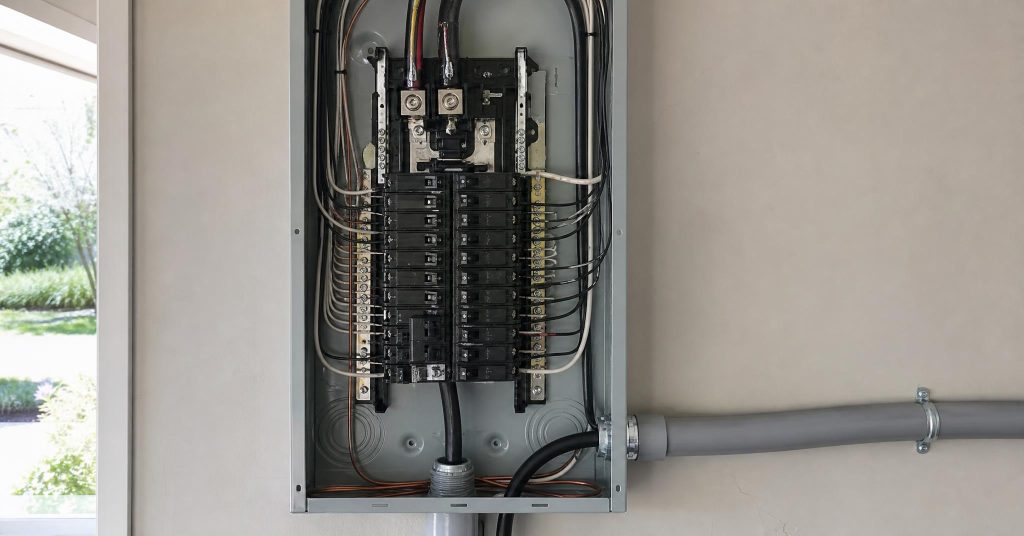
Most home EV charger projects are straightforward. The ones that get complicated tend to get complicated for the same reason: the electrical panel was not sized with a car in mind.
Level 1 versus Level 2
Level 1 is a standard 120-volt outlet. It works, it requires no new equipment, and it is slow. For a driver with a short commute and an overnight charging window, it can be enough.
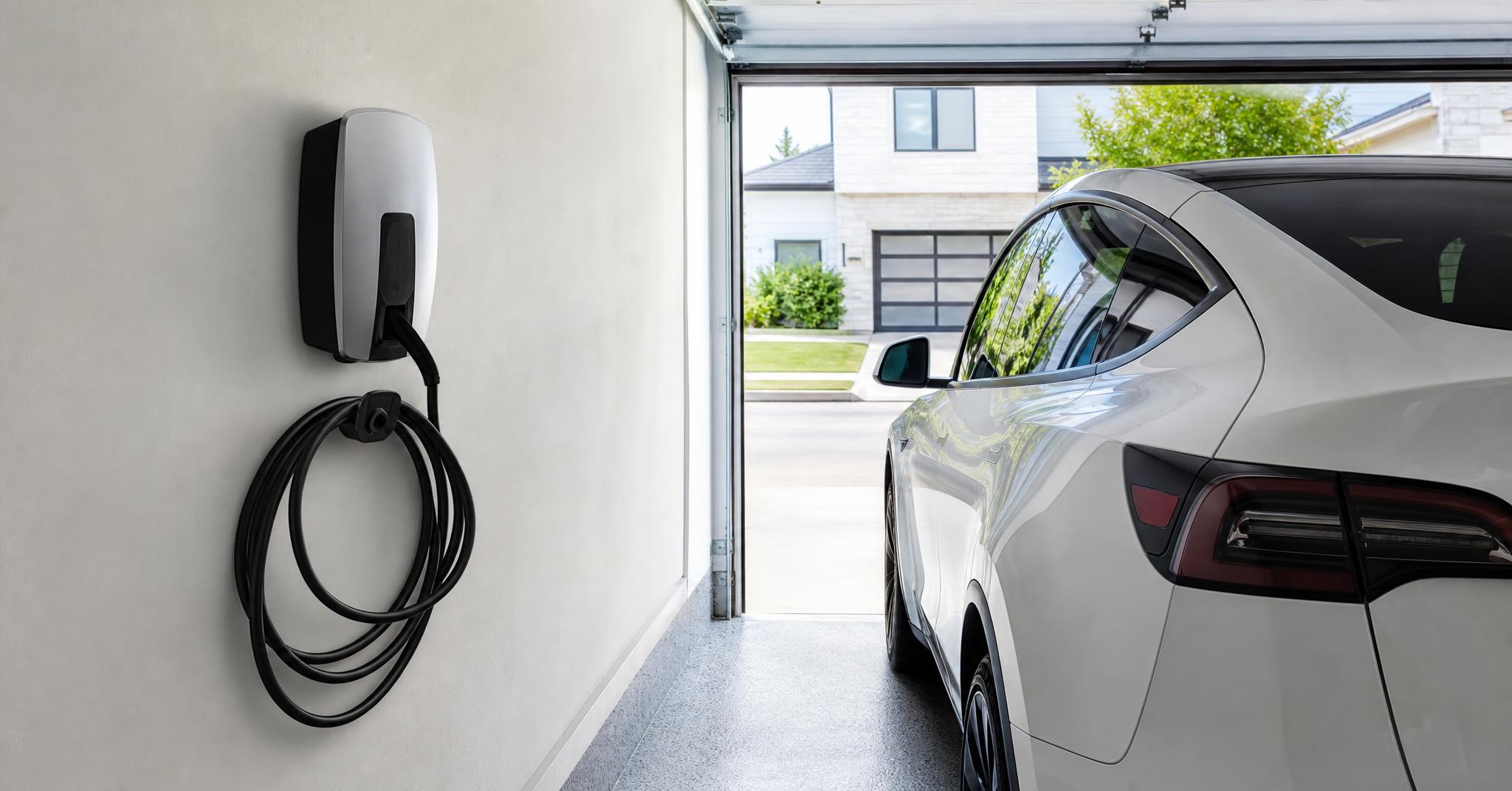
Level 2 runs on 240 volts and is what most people mean by installing a charger. It needs a dedicated circuit, and that circuit is where the planning happens.
The load question
An EV charger is a large, sustained load. Unlike a dryer that runs for an hour, a charger can draw near its rated current for hours at a stretch. That changes how it is treated in a load calculation.
The practical assessment covers a few things:
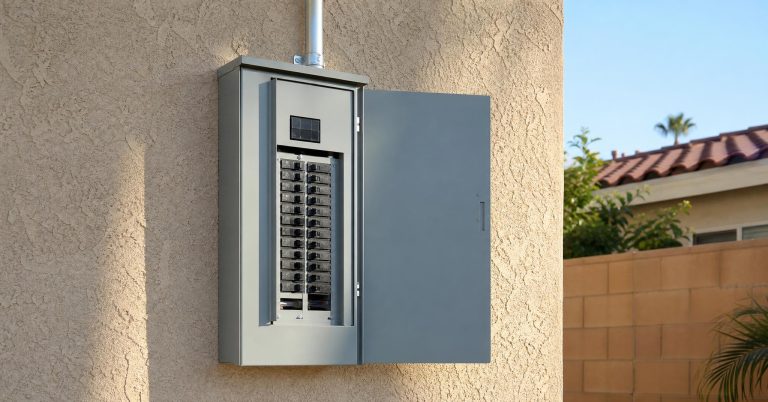
- Service size. Older homes are often on 100-amp service. Newer construction is commonly 200. The existing service size shapes what is possible without an upgrade.
- Existing demand. Air conditioning, electric range, electric dryer, pool equipment, and any existing 240-volt loads all count against available capacity.
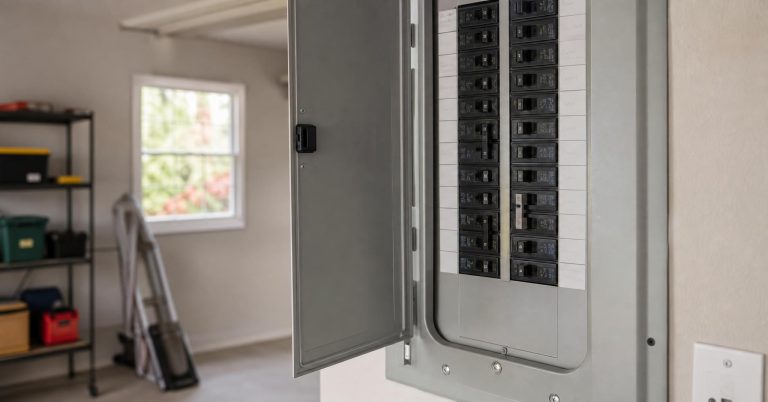
- Panel space. Sometimes there is capacity but no physical space for the breaker, which has its own set of solutions.
- Distance from panel to parking. A detached garage or a long run changes conductor sizing and cost.
If the panel cannot carry it
A panel upgrade is one path. It is not the only one. Load management devices can allow a charger to share capacity by throttling or pausing when other large loads are active. Choosing a lower-amperage charger is another option, and for many households the difference in overnight charge is not meaningful.
Which approach makes sense depends on the house, the vehicle, and how you actually drive, which is why this is worth assessing before buying hardware.
Permits and inspection
EV charger circuits are permitted work in San Diego County jurisdictions. Beyond compliance, a permitted and inspected installation is a documented one, which matters at resale and for warranty questions on the vehicle side.
Peak Power Systems handles EV charger installation across Lakeside, El Cajon, Santee, La Mesa, and the surrounding areas, starting with the load assessment rather than the mounting location.