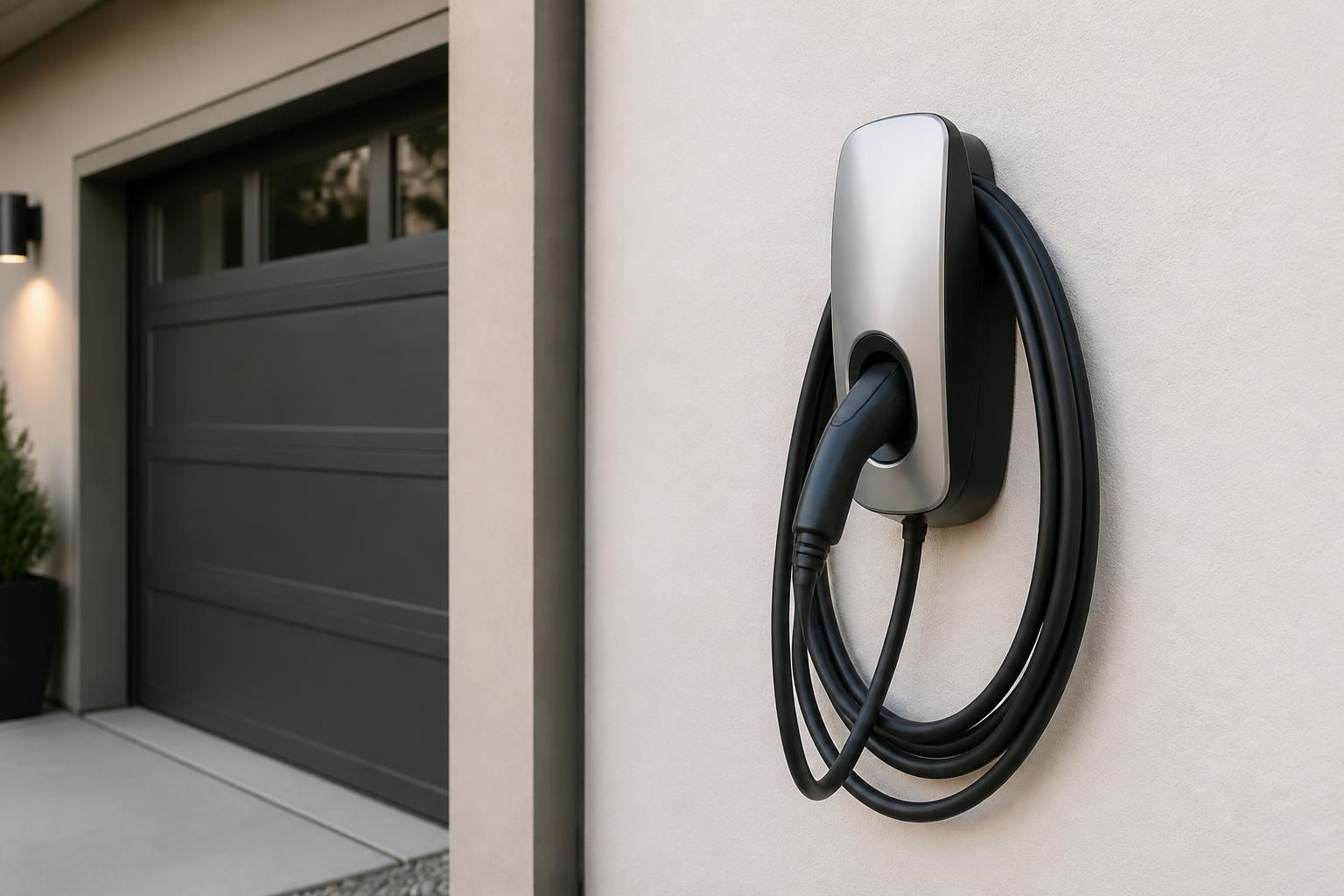
Home charging is one vehicle, one circuit, one overnight window. Commercial and multi-family charging is several vehicles competing for a fixed amount of electrical capacity, usually during the same hours, on a property where somebody has to decide who gets access and who pays.
The electrical work is recognisable. The planning around it is not, and that is where these projects succeed or fail.
The instinct is to count parking spaces and multiply. That number is almost always larger than the service can carry, and it produces a quote that goes nowhere.
The realistic approach starts from what the property's electrical service can actually support after existing loads, then works out how many charging points that covers and whether load sharing closes the gap. Load management lets multiple chargers draw from a shared allocation, throttling each as demand rises. It means slower charging when the lot is busy, which for vehicles parked all day is usually irrelevant.
That single decision often makes the difference between a viable project and one that needs a service upgrade first.
Vehicles sit for eight hours or more, which is the friendliest possible charging scenario. Slower shared charging works well because the dwell time is long, and it lets a modest service support a surprising number of spaces.
The questions that actually take time are usually about access control and whether employees are charged for use.
The opposite situation. Dwell time is short, so charging speed is the point, which means more capacity per space and fewer spaces for the same service.
Placement matters more here too. Charging positioned awkwardly gets used less regardless of how good the equipment is.
The hardest of the three, and rarely for electrical reasons. Assigned versus shared parking, how usage is metered and billed, who owns the equipment, and what happens when demand exceeds what was installed are all questions that need answering before anyone specifies hardware.
Phasing usually helps. Installing conduit and capacity for more positions than are populated on day one is considerably cheaper than returning to trench the same ground twice.
The electrical side end to end: assessing the existing service, load calculations, distribution and subpanel work, the runs and conduit, and the installation itself. Where a panel or service upgrade is needed we scope it as part of the same project rather than as a surprise.
Permitting and inspection are part of the work. Commercial installations also tend to involve more coordination around trading hours and tenant access, which belongs in the schedule rather than arriving on the day.
Very few properties should install their final number of charging positions on day one. Demand is hard to predict and equipment keeps changing.
What is worth doing on day one is the groundwork. Trenching, conduit, and distribution capacity are the expensive, disruptive parts, and installing them for more positions than you populate immediately is dramatically cheaper than repeating the excavation in two years.
The pattern that works is: build capacity for where you think you will be, populate for where you are, and leave the path to expand without touching the ground again.
Programs supporting commercial and multi-family charging exist at utility and state level in California, and they change regularly in scope, funding, and eligibility.
We are electricians rather than incentive consultants, so we will not tell you what you qualify for. What we will do is make sure the installation is documented and specified in a way that does not disqualify you, since some programs carry requirements about equipment, metering, or access that are far easier to build in than to retrofit. Check current programs before finalising the specification, not after.
A charging installation on a commercial property is customer-facing or employee-facing infrastructure, and a position that has been out of service for three weeks is worse than one that was never installed.
Worth deciding up front: who notices when a position fails, who is called, and how quickly it needs resolving. Equipment with remote monitoring makes the first part automatic. The rest is a process question, and it is easier to answer before the first failure than during it.
It depends on the existing service and what is already drawing from it. That is the first thing we assess, and load sharing usually raises the answer meaningfully.
Multiple chargers drawing from a shared allocation, with each throttling as overall demand rises. It trades peak speed for more positions, which suits long dwell times well.
Sometimes, but less often than people assume once load management is considered. We would rather show you both options with real numbers.
Yes, and it is usually the sensible approach. Installing conduit and capacity for future positions during the first phase is far cheaper than trenching the same ground twice.
Those are features of the charging equipment and its management platform rather than the electrical installation. We will make sure the hardware you choose is supported by the work we do.
There is usually a power interruption while distribution work is tied in. We schedule that around your operating hours and give you the window in advance.
This sits within our EV charging services, alongside home charger installation. For businesses also weighing outage protection, commercial standby generators covers the other half of the power conversation.

Get Started
Share a few details about your generator or electrical project and we will help you understand the next best step, whether you are planning a standby installation, scheduling maintenance, or upgrading the electrical system that supports it.