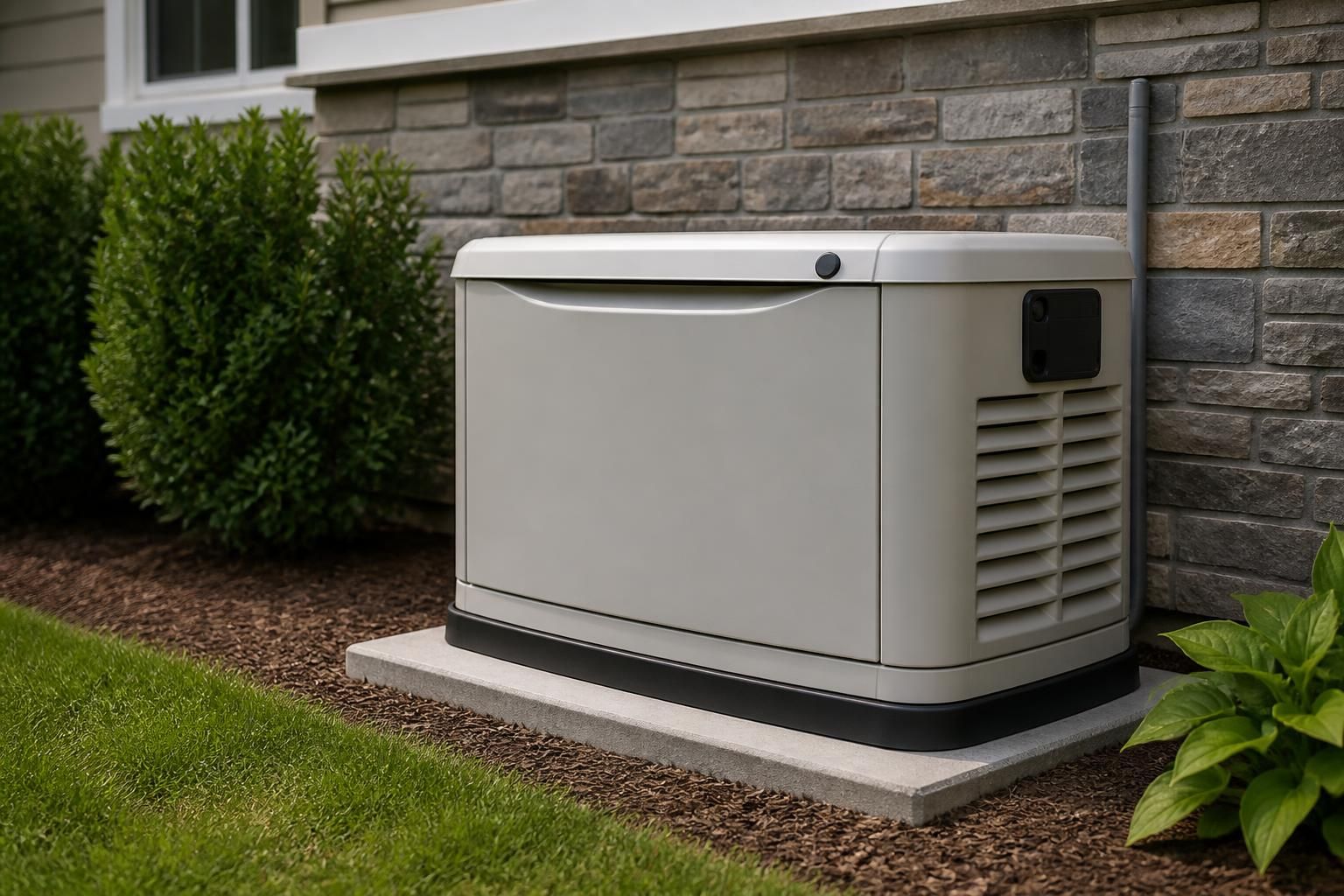
That is the whole problem. The unit sits for months at a time, and nothing about sitting quietly tells you whether it will work. Batteries lose capacity. Fuel degrades. Connections loosen. Small faults accumulate with nobody watching.
The failure mode for a neglected standby generator is discovering the fault during the outage it was bought for. A service plan exists to make sure that does not happen.
Most standby units run a periodic self-test, and people reasonably assume this covers them. It does not, and the gap matters.
A self-test usually runs the engine briefly with little or no load. It confirms the unit can start. It does not confirm that it can carry your property, that the transfer switch will actually move the load, or that the battery has enough capacity left for a cold start after a long idle period.
Those are exactly the things that fail, and they only surface under a real test.
A visit works through the system rather than the engine alone. Battery condition and charging circuit. Fuel supply and quality. Connections and terminals. Control board and any logged faults sitting there unread.
Then the part that matters most: a transfer test under load, so the whole chain is verified end to end. That is the difference between believing the system works and knowing it does.
You get told what was checked, what condition things are in, and what is trending toward needing attention. A battery that is weakening is much cheaper to replace on a scheduled visit than at two in the morning during a shutdown.
It depends on the unit, its age, and how much you are relying on it. A newer residential unit needs less attention than an older one or a commercial system carrying a business.
What matters more than frequency is that it happens on a schedule at all, rather than when somebody remembers. The most common pattern we see is a unit serviced attentively for the first year and then not again until it fails.
It is easy to defer because nothing appears to be wrong. That is the nature of standby equipment: it looks fine right up until the moment it matters.
Set against what a standby system costs to install, ongoing service is a modest commitment. It is also the only thing that converts that investment into actual reliability. A generator you have not tested is a hope, not a plan.
A visit is systematic rather than a quick look. Battery condition and the charging circuit come first, because that is where most failures originate. Fuel supply and quality next, particularly on units that have not run under real load recently.
Then the physical inspection: connections and terminals, signs of corrosion or heat, the enclosure and its seals, and anything that has changed around the unit since the last visit. Landscaping growing into required clearances is more common than you would expect.
The control board gets read for logged faults, which frequently contains information nobody has looked at. Then the transfer test under load, verifying the full chain from outage detection through to the property actually running on generator power and back again.
You get a plain summary of what was checked, what condition it is in, and what is trending toward attention.
Service history matters more than people expect. Manufacturer warranty terms generally assume maintenance has happened, and a documented history is what supports a claim if one is ever needed.
For a business it can also be required evidence for insurance or a landlord. Either way, the record is a by-product of doing the work on a schedule, and it is far easier to maintain than to reconstruct.
A few things are worth an owner's attention without any tools. Watch or listen for the self-test actually happening on schedule, since a test that has silently stopped running is itself a signal. Keep the clearances around the unit clear of vegetation and stored items. Look for any warning indicator on the unit rather than assuming it will be obvious.
If the unit has run during a genuine outage, mention it at the next service. How it behaved under real load is useful information, particularly if anything felt different.
No. A self-test confirms the engine starts. It does not confirm the unit can carry your load or that the transfer equipment works. Those need a real test.
Not a problem. We service systems regardless of who installed them.
Battery condition, by a wide margin. It is also the cheapest thing to fix on a scheduled visit and the most annoying to discover during an outage.
Service covers inspection and testing. If something needs fixing, that is quoted separately under generator repair so you can see what you are paying for.
Yes, though less intensively. Newer units still have batteries and fuel, and those are the components that fail first regardless of age.
More important, not less. See commercial standby generators.
Tell us what unit you have and roughly when it was last properly serviced, as opposed to when it last ran a self-test. That is usually enough to recommend a sensible schedule.
Service plans sit within our generator services, alongside maintenance and repair.

Get Started
Share a few details about your generator or electrical project and we will help you understand the next best step, whether you are planning a standby installation, scheduling maintenance, or upgrading the electrical system that supports it.